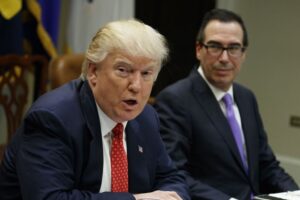

A photograph can reveal more than a thousand speeches.
Recently, one image circulated showing every living former president and first lady gathered together: Bill and Hillary Clinton. George and Laura Bush. Barack and Michelle Obama. Joe and Jill Biden. One couple was missing.
Around the same time, another photograph emerged from the G7 summit. World leaders stood together in conversation, yet the American president again appeared visually separated from many of his counterparts.
The predictable reaction was partisan. Supporters defended the absence. Critics celebrated it. Social media transformed two simple images into another round of tribal warfare.
But I don’t think the photographs are primarily about politics.
I think they’re about leadership.
Long before Donald Trump entered politics, he built his business career around a highly personalized model of leadership. Relationships were often transactional. Loyalty was prized. Disagreement frequently became conflict. Former partners, executives, attorneys, contractors, and political allies regularly found themselves moving from trusted confidants to outspoken critics.
The same characteristics that made Trump a singular business figure would later become defining features of his presidency.
To many Americans, this was refreshing. Trump appeared willing to challenge institutions, ignore convention, and reject the unwritten rules that governed public life. Millions of voters saw strength where others saw disruption. There is no question that this approach created one of the most powerful political movements of the modern era.
To be fair, this leadership style has real strengths. It allows for decisive action. It creates clarity. It energizes supporters exhausted by bureaucracy and political caution.
Yet every strength carries a corresponding weakness.
The same instinct that allows a leader to stand apart from a broken system can also leave that leader isolated from the people and institutions necessary to create lasting change. Coalition-building becomes difficult when disagreement is treated as disloyalty. Over time, even successful leaders can find themselves surrounded by fewer and fewer trusted allies.
That pattern has followed Trump throughout both business and politics.
At some point, every leader must ask a difficult question: If conflict follows me everywhere I go, is everyone else the problem? Or is the common denominator staring back at me in the mirror?
Leadership ultimately depends on relationships—not merely with supporters, but with critics, competitors, institutions, and even former rivals. Politics, like business, is rarely a solo endeavor. The greatest presidents fought when necessary, but they also persuaded, negotiated, and built coalitions that outlived moments of conflict.
Ironically, I don’t believe Trump’s relationship with Barack Obama fits neatly into the category of hatred.
In fact, I suspect it is something much more psychologically complex.
There is an old principle in psychology that the people who occupy the greatest space in our minds often embody qualities we admire, envy, resent, or struggle to integrate within ourselves. The opposite of love isn’t hate. It’s indifference. Hatred and admiration are much closer cousins than most people realize because both require an extraordinary investment of emotional energy.
Think about how much attention Trump has devoted to Obama over the past fifteen years.
Before entering politics, Trump became the public face of the birther movement. During his presidential campaigns, Obama remained a constant point of reference. Even after defeating Hillary Clinton, Trump often seemed more focused on Obama than on the opponent he had actually beaten. Years after Obama left office, Trump continued comparing crowd sizes, accomplishments, popularity, and presidential legacies.
That level of sustained attention is unusual.
The two men represent almost opposite archetypes of leadership. Obama projects calm, restraint, institutional legitimacy, intellectual discipline, and coalition-building. Trump projects instinct, confrontation, disruption, personal charisma, and loyalty. Yet I sometimes wonder whether Trump recognizes qualities in Obama that he cannot fully dismiss because Obama possesses forms of influence that wealth and political power alone cannot buy.
Trump became wealthy and famous. Obama became something arguably more difficult: admired by millions of people who fundamentally disagree with many of his policies. He earned legitimacy within institutions Trump has spent much of his public life fighting against, and his cultural influence extends well beyond politics itself.
Carl Jung argued that the people who trigger us most often function as mirrors. Not because they are identical to us, but because they reveal something unresolved within us. Whether that idea applies here, only Trump himself could answer.
What seems clear, however, is that Obama has become one of the defining reference points of Trump’s public life. Rivals often reveal as much about us as they do about the people we oppose.
Perhaps that’s why those photographs stayed with me.
Not because one man was absent from one picture or stood apart in another, but because leadership is ultimately measured less by how effectively we separate ourselves from others than by how effectively we bring people together in pursuit of something larger than ourselves.
Related Insights